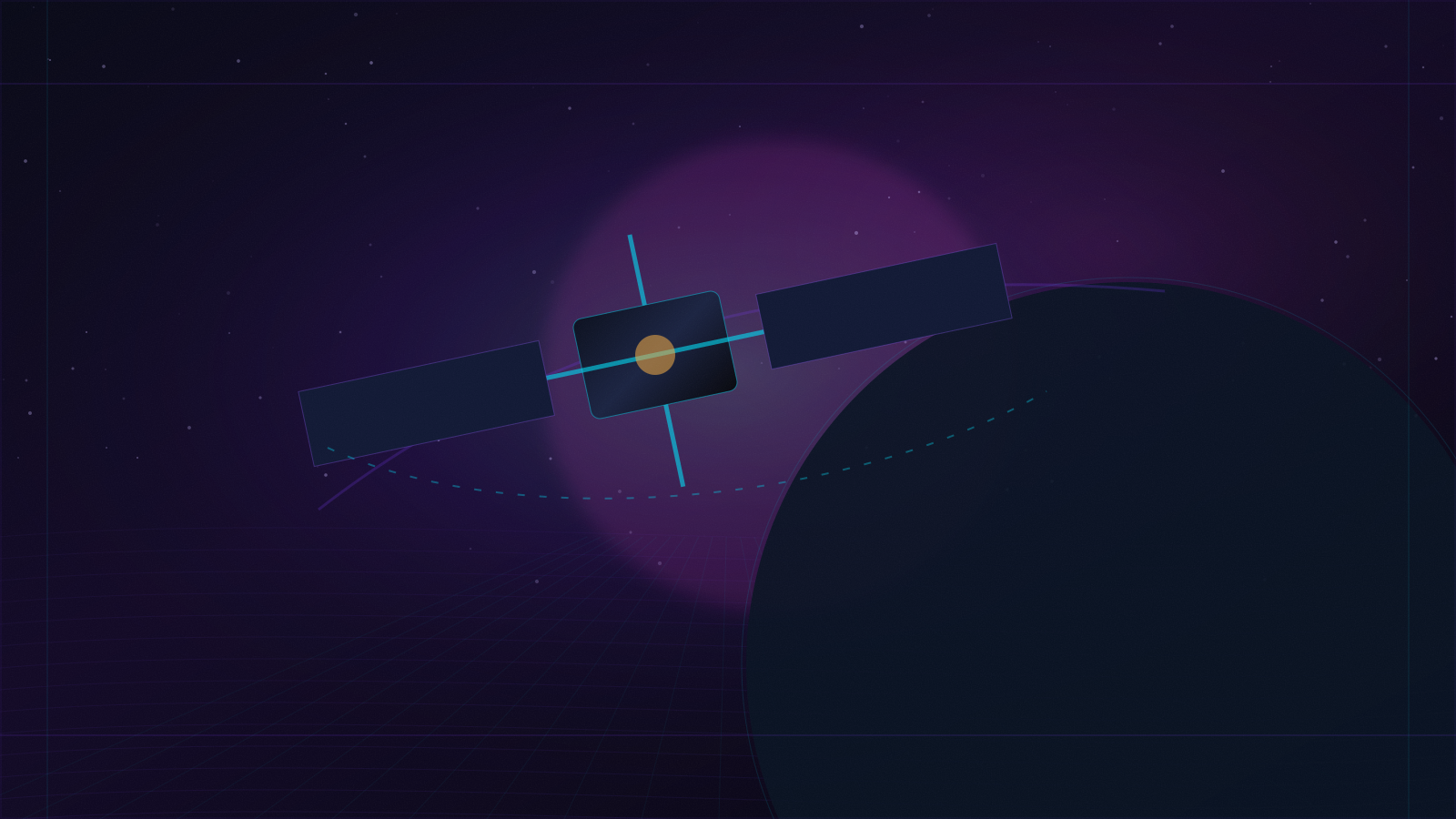
Project Argon Mapping Spy Satellite Program
Project Argon mattered because the Cold War did not only require pictures of missiles and bomber bases.
It required maps.
That is the key.
What U.S. planners wanted was not merely another spy satellite with sharper eyes. They wanted a system that could help build a worldwide geodetic framework from orbit, improve military charts in denied regions, and provide the broad contextual imagery needed for navigation, targeting, and global planning.
In that form, Argon became more than a side branch of Corona.
It became one of the clearest real black programs in which reconnaissance, cartography, and geodesy fused into a single orbital architecture.
That is why it still matters.
It shows that one of intelligence’s least glamorous products—the map base beneath strategy—was already being built from space in the early 1960s.
The first thing to understand
This is not mainly a “spy satellite takes sharper spy pictures” story.
It is a mapping-from-orbit story.
That matters.
The most famous first-generation U.S. photo-reconnaissance satellites are remembered for photographing denied Soviet territory. Argon was built for a different but related need.
It was built to help measure the Earth.
That matters because military planning depends on more than identifying a target. It also depends on knowing exactly where the world is.
Corona’s sister program
The strongest official short description comes from the CIA itself.
That matters.
CIA’s public Corona history states plainly that Corona had sister programs, Argon for mapping imagery, and Lanyard for higher-quality imagery. citeturn393243view2turn505708search9
That matters because it locates Argon correctly from the start.
It was not an unrelated side experiment. It was part of the same first-generation reconnaissance family, but aimed at a different output.
Why mapping was a strategic requirement
This is where Project Argon becomes more interesting than its lower profile suggests.
That matters.
NASA’s declassification dataset for first-generation reconnaissance imagery explains that CORONA, ARGON, and LANYARD imagery was used not only to assess Soviet strategic missile developments, but also to produce maps and charts for the Department of Defense and other Federal Government mapping programs. citeturn393243view3
That matters because the same orbital systems that helped count missile sites also helped build the charting infrastructure needed to navigate, target, and plan globally.
In other words: mapping was intelligence.
The Army Map Service connection
Project Argon was driven heavily by map-makers, not only by intelligence interpreters.
That matters.
A declassified CIA history snippet says a second program was ARGON, “sponsored primarily by the Army Map Service and designed to establish a world-wide geodetic control network.” citeturn608630search3 Another declassified program-history snippet says the camera was built to satisfy the earth-mapping requirements of the Army Map Service (AMS). citeturn505708search12
That matters because it fixes the program’s real purpose: Argon was supposed to help provide the geodetic and cartographic framework behind military operations, not simply prettier reconnaissance photos.
Why geodetic control mattered
Geodetic control sounds abstract until you see what war planning needs from it.
That matters.
A worldwide geodetic control network helps tie maps, coordinates, and reference systems together with higher precision. In the Cold War setting, that mattered for:
- navigation,
- targeting,
- strategic planning,
- and chart production in places where the United States could not freely survey on the ground.
That matters because Argon was part of a deeper transformation: moving map-making from vulnerable terrestrial survey lines into orbit.
The 1959 reorganization
Argon’s birth also reveals how secrecy shaped program structure.
That matters.
The Space Review’s historical reconstruction explains that a geodetic satellite effort known as VEDAS posed a classification problem because it would use the same film-return technique as Corona but did not fit comfortably under the existing cover story. As a result, officials agreed to cancel VEDAS and recreate it under another name: ARGON. citeturn125848search6turn608630search9
That matters because Argon was not just born from mapping needs. It was also born from secrecy management.
CIA and ARPA control
This is where the file starts to look unmistakably like a black program.
That matters.
A declassified CIA program-history snippet says that an agreement between CIA and ARPA on control of the mapping project, named ARGON, was signed on 7 July 1959. The same snippet says this gave CIA authorization to contract for exploitation of Argon’s product for the Army Map Service while maintaining security control over the project. citeturn505708search3turn608630search14
That matters because Argon sat at the intersection of:
- military mapping needs,
- intelligence secrecy,
- and early space-program management politics.
KH-5 and the camera logic
Operationally, Argon became the KH-5 system.
That matters.
NASA/USGS catalog records identify ARGON systems as using the designator KH-5. citeturn608630search11turn505708search4 Specialist reconstruction describes the KH-5 as a single framing-camera system designed for broad coverage rather than the finer-detail panoramic photography associated with other early Corona variants. citeturn393243view4turn352336search2
That matters because the camera tells you the mission.
Argon traded sharpness for area. That is exactly what a mapping satellite should do.
Why lower resolution was not failure
This is one place where casual readers often misunderstand the program.
That matters.
Argon’s imagery was relatively low-resolution by comparison with more target-focused systems. But that was not the program falling short of its goal. That was the goal.
The camera’s purpose was to provide broad-area geodetic and cartographic imagery, not detailed close-up interpretation of individual weapons systems. citeturn505708search12turn393243view4
That matters because Argon was not a weaker spy satellite. It was a different kind of one.
Discoverer cover
Like Corona, Argon flew under the public Discoverer cover story.
That matters.
The Space Review notes that the first Argon launch, officially known as Discoverer 20, had the secret internal designation CORONA Mission 9014A—A for ARGON. It emphasizes that Discoverer was part of the deception structure used to hide the true reconnaissance mission. citeturn608630search9turn393243view4
That matters because the mapping mission had to hide inside the same cover shell as the intelligence mission.
Maps were secret too.
The first launch
Project Argon first flew in February 1961.
That matters.
Specialist histories place the first launch on 17 February 1961, under the Discoverer XX cover designation. citeturn608630search9turn352336search2
That matters because it places Argon firmly in the most formative period of the first-generation reconnaissance-satellite era: after Corona had proven film return was possible, but while the overall family was still evolving rapidly.
How the satellites operated
The operational logic also differed from standard Corona practice.
That matters.
The Space Review explains that unlike Corona, which often turned its camera on only over specific targets, the Argon camera operated more continuously because each frame covered much greater territory and used less film per scene. citeturn393243view4
That matters because the mapping mission required coverage, not just moments.
The satellite was not looking for one place. It was trying to build a wider reference picture of the Earth.
Mission count and success rate
Argon’s history was real but imperfect.
That matters.
The best specialist reconstruction says 12 Argon missions were launched between February 1961 and August 1964, of which six were successful. citeturn393243view4
That matters because the program was not an unbroken triumph. It was a hard early space system in a period when launch vehicles, recovery, camera systems, and orbital mechanics still produced frequent failures.
Why Argon flew higher
Argon also flew in a somewhat different geometry than many Corona missions.
That matters.
The Space Review notes that Argon satellites generally operated in a slightly higher orbit than their Corona counterparts. citeturn393243view4 That makes sense for a system optimized for broad-area coverage rather than the best possible close-up detail.
That matters because even the orbit reflected the mission logic.
KH-5 designation
By 1962, the program also acquired its best-known KEYHOLE label.
That matters.
The Space Review explains that when the newly created National Reconnaissance Office introduced the KEYHOLE designator system, ARGON became KH-5. citeturn393243view4
That matters because it places Argon inside the formalized NRO-era architecture of overhead reconnaissance, not outside it as a one-off cartographic curiosity.
What Argon contributed
Argon’s contribution was infrastructural.
That matters.
Where Corona gave analysts crucial target coverage, Argon helped establish the larger geodetic and cartographic framework behind military map production. CIA and NASA/USGS histories both make clear that these early systems were serving national-security mapping requirements, not only strategic surveillance. citeturn393243view2turn393243view3
That matters because the map base is easy to forget precisely because it succeeds quietly.
Antarctica and the program’s afterlife
One of the most interesting parts of Argon’s legacy came decades later.
That matters.
Later scientific work used declassified Argon imagery to assemble map-quality mosaics of coastal Antarctica. The Alaska Satellite Facility’s hosted paper summary notes that individual declassified Intelligence Satellite Argon photographs were precisely assembled into a map-quality mosaic, with geometric accuracy roughly equivalent to the original ~140-meter-class Argon imagery. citeturn125848search3
That matters because it shows the long shadow of the program. A Cold War military mapping system later became a scientific time machine for glaciology and polar change studies.
Why Antarctica matters symbolically
This is more than a side note.
That matters.
Antarctica represents one of the cleanest examples of how declassified intelligence imagery can outlive its original strategic purpose and become valuable for Earth science. Argon’s imagery of remote, poorly mapped areas helped scientists recover historical baselines that would have been impossible to reconstruct otherwise. citeturn125848search3
That matters because it reveals a second life for the archive.
Why Argon stayed overshadowed
Project Argon never became as famous as Corona for an obvious reason: missiles are more dramatic than maps.
That matters.
Corona’s target photography helped resolve existential strategic fears. Argon’s cartographic output was quieter. But quiet does not mean minor.
That matters because military history often remembers the camera that found the target and forgets the camera that drew the map beneath it.
What the strongest public-facing record actually shows
The strongest public-facing record shows something very specific.
It shows that Project Argon was the KH-5 mapping and geodetic branch of the early Corona family; that it was sponsored primarily by the Army Map Service to help establish a worldwide geodetic control network; that CIA and ARPA formalized control arrangements around the project in 1959 while preserving strict security; that it flew under Discoverer cover from 1961 to 1964; that its framing camera traded fine detail for broad-area coverage suitable for cartography; and that its declassified imagery later proved valuable for scientific mapping projects such as Antarctica mosaics.
That matters because it gives Project Argon its exact place in history.
It was not only:
- a Corona side note,
- a low-resolution camera,
- or a technical footnote.
It was one of the first real military mapping systems in orbit.
Why it matters in this encyclopedia
This entry matters because Project Argon Mapping Spy Satellite Program explains that Cold War reconnaissance was never only about finding enemies.
It was also about locating the world accurately enough to act in it.
Instead of chasing a single target, Argon helped build the grid.
Instead of maximizing detail, it maximized context.
Instead of becoming famous for a dramatic intelligence coup, it became foundational by helping make military cartography global and orbital.
That matters.
Project Argon is not only:
- a KH-5 page,
- a Discoverer page,
- or an Army Map Service page.
It is also:
- a geodesy page,
- a mapping-from-space page,
- a Corona-family page,
- a black-program infrastructure page,
- and a classified-cartography page.
That makes it one of the strongest foundation entries in the archive.
Frequently asked questions
What was Project Argon?
Project Argon was the KH-5 mapping and geodetic branch of the early Corona reconnaissance family, designed to provide broad-area imagery for cartography and geodetic control.
Was Project Argon a real program?
Yes. CIA histories, NASA/USGS declassification records, and specialist historical reconstruction all support Argon as a real early satellite mapping program.
How was Argon different from Corona?
Argon was optimized for wide-area mapping and geodesy, while Corona’s more famous missions focused more directly on strategic reconnaissance and target photography.
Who mainly wanted Project Argon?
The declassified program-history record says Argon was sponsored primarily by the Army Map Service.
Why was geodetic control important?
Because accurate global reference systems are essential for mapping, navigation, targeting, and military planning, especially in denied regions.
What does KH-5 mean?
KH-5 was the KEYHOLE designation later applied to the Argon camera system when the NRO formalized the numbering of reconnaissance satellite programs.
When did Argon fly?
Argon missions flew from February 1961 to August 1964 under Discoverer cover.
Was the program successful?
Partly. Historical reconstruction indicates 12 launches and about six successful missions, which was a meaningful but imperfect record in the early film-return era.
Why is Antarctica linked to Argon?
Because declassified Argon imagery was later used to build map-quality Antarctic mosaics and support long-term scientific comparison.
What is the strongest bottom line?
Project Argon matters because it turned early spy-satellite architecture into a global cartographic and geodetic tool, proving that maps themselves were a form of Cold War intelligence.
Related pages
- Black Projects
- Project Aquacade Signals Intelligence Satellite Program
- Program 621B Early GPS Navigation Satellite Program
- Project Aquatone U-2 Spy Plane Black Program
- Program 437 Thor Anti-Satellite Black Program
Suggested internal linking anchors
- Project Argon mapping spy satellite program
- Project Argon
- KH-5 Argon history
- Argon mapping satellite program
- Project Argon Army Map Service
- Corona Argon sister program
- Project Argon Antarctica imagery
- declassified Project Argon history
References
- https://www.cia.gov/resources/publications/corona-between-the-sun-and-the-earth/
- https://data.nasa.gov/dataset/corona-satellite-photography
- https://www.cia.gov/readingroom/docs/CIA-RDP89B00980R000400120003-5.pdf
- https://www.cia.gov/readingroom/docs/CIA-RDP89B00980R000500080001-1.pdf
- https://www.cia.gov/readingroom/document/cia-rdp89b00980r000500090001-0
- https://www.cia.gov/static/Corona-Between-the-Sun-and-the-Earth.pdf
- https://www.thespacereview.com/article/5104/1
- https://cmr.earthdata.nasa.gov/search/concepts/C1220566178-USGS_LTA.html
- https://imagery.geology.utah.gov/pages/search.php?search=%21collection137
- https://asf.alaska.edu/wp-content/uploads/2019/03/DISP_kim.pdf
- https://space.jpl.nasa.gov/msl/Programs/corona.html
- https://www.cia.gov/readingroom/docs/1995-01-01.pdf
- https://www.cia.gov/readingroom/docs/CIA-RDP76B00734R000100140006-0.pdf
- https://space.skyrocket.de/doc_sdat/kh-5_ab.htm
- https://www.thespacereview.com/article/5104/1
Editorial note
This entry treats Project Argon as one of the most important hidden cartography files in the entire black-projects archive.
That is the right way to read it.
Argon matters because it reveals something easy to miss in Cold War intelligence history: before a state can target the world precisely, it has to map it precisely. Corona became famous because it photographed strategic fear—missile sites, bomber fields, denied military space. Argon mattered because it helped build the reference world those photographs would eventually sit inside. Its imagery was broad, lower-resolution, and less dramatic, but that does not make it secondary. It makes it infrastructural. The Army Map Service wanted a worldwide geodetic control network, and Argon was one of the first serious attempts to use orbit to help supply it. That is the deeper significance of the file. It shows reconnaissance becoming cartography, intelligence becoming map base, and classified film-return technology becoming a tool not only for discovering threats but for measuring the planet. The program remained partially unsuccessful, partly overshadowed, and far less glamorous than other early satellite efforts. But its contribution was real. Project Argon helped prove that one of the quietest forms of power in the Cold War was the ability to draw the Earth from above.